

The Ultimate Guide to Developmental Play For Toddlers And Preschoolers: Integrating Montessori, Sensory, and Busy Book Activities for Early Learning
Dec
I. Introduction: Developmental play for toddlers and preschoolers — what it looks like
Developmental play for toddlers and preschoolers is the most effective way to build attention, problem-solving and early learning skills — long before formal school starts. When children stack, sort, pour or button, they are learning the basics of maths, language, and self-control. This guide brings together Montessori, sensory play, and Busy Book activities so parents can create a simple, screen-free learning routine at home.
Today’s parents across Europe and Australia want learning experiences that help children grow without relying on screens. This is where developmental play becomes essential. Developmental play is intentional. It supports the brain during its most rapid period of growth. It gives children the chance to explore, think, repeat, and master skills at their own pace.
This guide brings together three powerful approaches:
- Montessori activities that promote independence and order
- Sensory play that stimulates the brain
- Busy Book tasks that target fine motor skills and early learning
Together, they create a complete system for early childhood development.
What Sets Developmental Play For Toddlers And Preschoolers Apart?
Developmental play is child-led but carefully prepared by the adult. The goal is not to entertain the child. Instead, the goal is to empower them to explore and solve problems with confidence.
Children learn best when:
- Materials are simple
- Activities have a clear purpose
- Repetition is encouraged
- The environment is calm and easy to navigate
Because developmental play strengthens neural pathways through repetition, it directly supports later academic success in reading, writing, mathematics, and science.
The Synergy of the Three Pillars
Montessori, Sensory Play, and Busy Books work best when used together:
- Montessori: independence, order, concentration
- Sensory: exploration, self-regulation, creativity
- Busy Books: fine motor strength, sequencing, practical skills
When combined, these three pillars form a complete learning ecosystem at home.
II. Montessori at Home: Fostering Independence and Focus
The Montessori method teaches children to take responsibility for their own learning. It shows them how to follow their interests, concentrate deeply, and complete tasks from start to finish.
This approach is perfect for toddlers and preschoolers because it matches their natural desire to explore.
The Montessori Secret: The Prepared Environment
You do not need a special classroom to use Montessori at home. Instead:
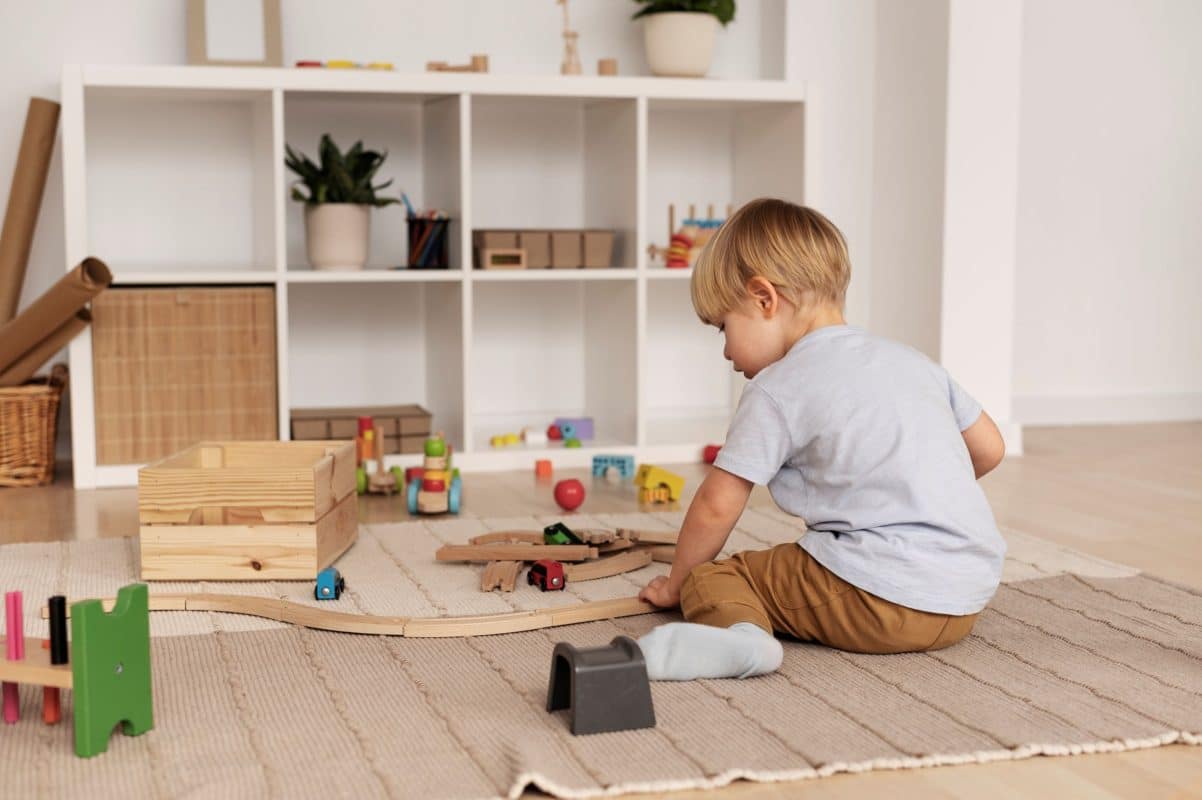
- Keep toys on low, open shelves
- Provide only a few items at a time
- Make materials beautiful and complete
- Give children space to choose and repeat
This environment creates order and calm, helping children feel confident and capable.
Practical Life Skills: Building Confidence Through Chores
Montessori practical life activities build independence. They also support fine motor skills and concentration.
Simple tasks such as:
- Pouring water
- Spooning beans
- Sweeping
- Buttoning
- Using tongs
…all help children coordinate their hands and eyes. These activities also support emotional development by giving children meaningful “real” work.
Busy Books: Applying Montessori Principles to Fine Motor Skills
Busy Books align perfectly with Montessori because they are quiet, focused, and hands-on. Each page teaches a single skill:
- Lacing
- Zipping
- Snapping
- Matching
- Sorting
- Counting
These activities help toddlers strengthen their fingers and prepare for writing.
III. Sensory Play and Brain Pathways
Sensory play is essential for building strong neural connections. When children explore textures, sounds, colors, and movement, the brain forms pathways that support future learning in STEM, language, and social skills. You can combine sensory and Montessori learning through Montessori activities for fine motor skills that support both movement and thinking.
Sensory Input: Why It’s Not Just “Messy Play”
Sensory play helps children:
- Process information
- Develop emotional regulation
- Improve focus
- Build language
- Strengthen problem-solving skills
When children scoop rice, squeeze sponges, or push playdough, they learn how the world works through trial and error.
Practical Ideas: Maximising Your Sensory Table
A simple plastic tub works well. Rotate fillers often.
Dry fillers: rice, pasta, beans, oats
Wet fillers: water, bubbles, sponges
Natural fillers: pinecones, stones, leaves
Tools: scoops, cups, funnels, tongs
Beyond the Table: Sensory Toys
Sensory toys provide stimulation without mess:
- Pop tubes
- Spinning wheels
- Wooden rattles
- Textured tiles
- Sensory beads
These tools help children calm down, explore, and practice logical thinking.
IV. Structured Play: Puzzles, Logic, and Academic Readiness
Structured learning activities help children prepare for school. They bridge the gap between free play and formal learning.
Puzzles: The Ultimate Tool for Spatial Reasoning
Puzzles teach:
- Spatial awareness
- Problem-solving
- Visual scanning
- Hand-eye coordination
They require children to test ideas, rotate pieces, and think logically.
Focused Play for Preschool Success
Before school begins, children need skills such as:
- Sequencing
- Concentration
- Following steps
- Fine motor control
- Listening
Activities like threading beads, cutting paper, and completing simple logic tasks are ideal.
Precision and Dexterity: The Link to Future Writing
Fine motor skills grow slowly. Children need daily practice through:
- Pouring
- Pinching
- Building
- Twisting
- Completing puzzles
This strengthens the muscles needed for pencil control.
V. Implementing Your Play Strategy: Tips for Parents
You do not need to spend hours each day preparing activities. Consistency matters more than quantity.
How to Create an Inviting Play Area
A “Yes Space” encourages independent play. The space should:
- Be safe
- Have simple materials
- Be easy to clean
- Include child-sized furniture
This supports autonomy and confidence.
The Power of Less: Toy Rotation
Keep out only a few toys from each category. Rotate them every two weeks. This method:
- Reduces overstimulation
- Builds deeper focus
- Keeps learning exciting
Establishing Routines for Concentration and Energy Release
Balance high-energy play with quiet tasks. Use Busy Books or puzzles during quiet time. Use gross motor play to release energy.
Conclusion: The Long-Term Impact of Intentional Play
Developmental play shapes the brain. It prepares children for school, builds emotional confidence, and creates a strong base for future learning.
Parents who combine Montessori, Sensory Play, and puzzles create a rich environment that supports growth in every area.
For an accessible summary of early brain development and why play matters, see “InBrief: The Science of Early Childhood Development — Harvard Center on the Developing Child.“
For more information, see relative article
- How Sensory Toys for Early STEM Skills Build Strong Thinkers
- Montessori Activities for Fine Motor Skills (Sensory Play for Strong Writing Hands)
- A Parent’s Guide to Sensory Toys: How They Boost Brain Development and Focus
Suggested product
- Wooden Learning Rocket
- Montessori Radish Garden Sorting Toy – Wooden Matching & Fine Motor Skills Activity Box
- Montessori Wooden Farmhouse
- Montessori Sensory Busy Book
FAQ
A: Developmental play suits children aged 1–5; most activities work best for toddlers and preschoolers.
A: No. Many activities use simple materials: blocks, rice, spoons, Busy Books, and wooden puzzles.