

From Screens to Hands: How Tactile Play Builds Real Intelligence in Children
Oct
Introduction
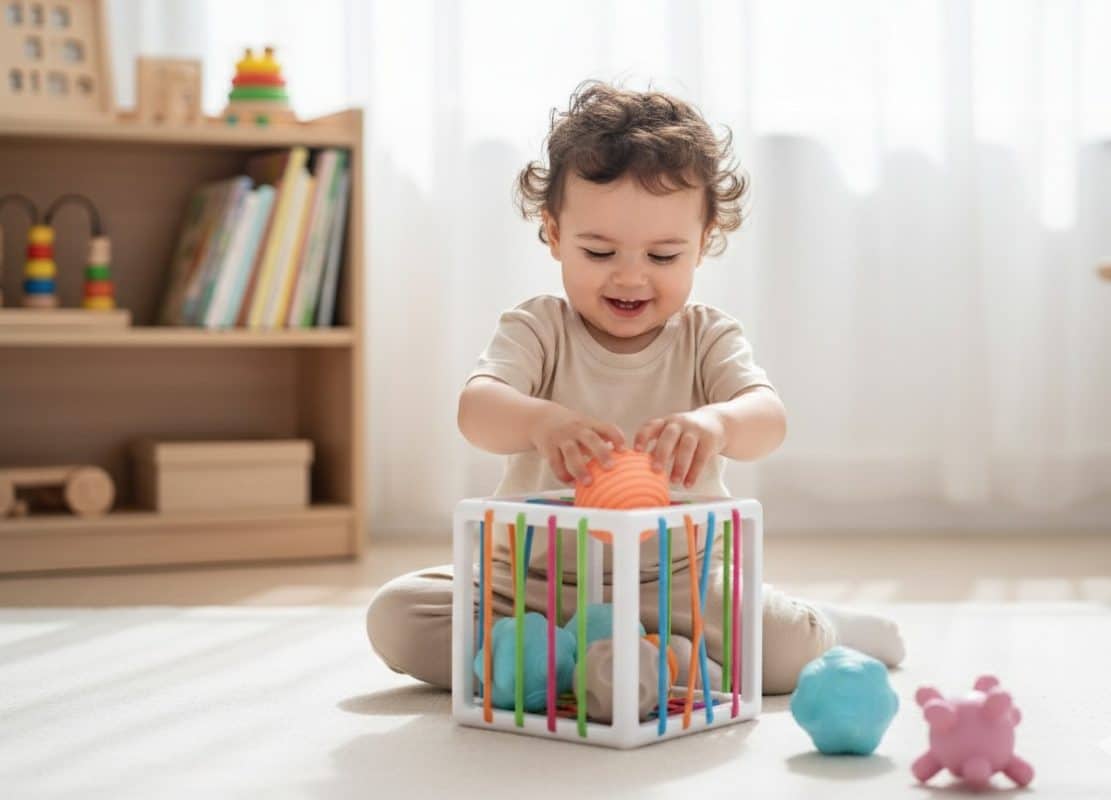
As screens dominate modern life, we often forget one of the most powerful tools for childhood learning: the sense of touch. Tactile play for child development — hands-on, sensory-rich interaction — doesn’t just feel good. It builds real cognitive strength, helps children internalize abstract concepts, and supports everything from language to self-regulation.
In this article, you’ll discover how tactile play transforms brain development, why it’s a better investment than flashy tech toys, and how you can create a tactile-rich environment at home (even in small apartments!).
🧠 The Science Behind Tactile Play
Neuroscience shows that sensory input from touch engages more neural pathways than visual or auditory stimuli alone. When children manipulate objects — like blocks, sand, magnetic sticks, or puzzles — they observe cause and effect, test hypotheses, and refine their motor control. Over time, these experiences support:
- Synaptic connectivity, making their brains more efficient
- Multimodal learning, bridging senses to abstract thinking
- Better memory retention for concepts introduced through touch and action
According to a 2024 review from MDPI Journal on Child Development, sensory and screen-free play supports emotional regulation and creativity in children.
In short: tactile play is learning you can feel.
📱 Why Screens Aren’t Enough
While screens offer animation, immediate feedback, and sensational visuals, they bypass the richness of tactile feedback. A child watching a LEGO build is passive. A child manipulating a LEGO piece is active — and that difference matters.
Over-reliance on screens can dull sensory acuity and reduce motivation to tinker, wonder, and experiment. Parents looking for practical alternatives often begin with screen free learning activities for toddlers that encourage movement, curiosity, and hands-on discovery.
🌿 How to Bring Tactile Play Home — Simple Tips
- Rotate tactile kits weekly — magnetic sets, wooden puzzles, loose parts
- Create a low shelf with containers — children can self-select their tactile tools
- Set 15-minute “hands-only” breaks — no tablets, only touch
- Use everyday materials — fabric scraps, stones, textured cardboard
- Observe, don’t dictate — let the child lead play, stepping in only as support
These small choices enrich play deep inside. Families who create calm environments often notice stronger focus and creativity. This is one reason many parents now explore minimalist playroom ideas to reduce overstimulation and encourage deeper engagement.
🏡 Ideal Montessori Products for Tactile Growth
- Magnetic building kits that click and snap
- Busy boards with textures and daily life elements
- Wooden puzzles with grooves and natural shapes
- Sensory story books with tactile pages
Many families also use sensory toys for brain development because tactile experiences help children strengthen focus and build important neural connections.
Each tool rewards the senses, strengthens cognition, and deepens focus.
📈 Long-Term Benefits Parents Often Miss
Over time, children who engage regularly in tactile play show:
- Better spatial thinking (geometry, maps)
- Enhanced emotional self-regulation
- More confidence in tackling open-ended tasks
- Stronger ability to focus without external stimulation
Over generations, tactile play becomes not just a hobby — it’s a foundation for lifelong intelligence.
Play is not simply entertainment. Every time children touch, build, sort, and explore, they strengthen the foundations for lifelong learning. Choosing hands-on experiences today can support deeper thinking tomorrow.
Related Reading
- Learn practical Montessori alternatives to reduce screen time
- Discover the benefits of boredom for children and why slow play matters
- Explore how to build a Montessori learning hub at home
FAQ
What is tactile play?
Tactile play involves hands-on activities that encourage children to explore through touch, movement, and sensory experiences.
Why is tactile play important for child development?
Tactile play strengthens brain connections related to problem-solving, focus, language, and emotional regulation.
Is tactile play better than screen time?
Hands-on play activates multiple senses simultaneously, while screens often provide passive experiences.
How can parents encourage tactile play at home?
Parents can offer puzzles, sensory toys, loose parts, and screen-free activities that invite exploration.