

Why Your Child Needs Boredom: The Hidden Value of Slow, Screen-Free Play
Oct
Introduction
In today’s world of constant entertainment, parents often feel the need to keep their children busy every second. But what if boredom wasn’t the enemy we think it is? The benefits of boredom for children go far beyond what meets the eye — it’s actually one of the most powerful tools for creativity, focus, and emotional growth. This idea connects closely with toy rotation strategy, where fewer toys lead to deeper play.
When kids have quiet, unstructured time, their minds wander, ideas bloom, and imagination takes center stage. In a fast-paced, screen-filled culture, giving children moments of stillness helps them reconnect with their inner world. This kind of slow, self-directed play is also the foundation of independent play habits that help children build confidence over time.
How Boredom Builds Creativity and Focus
When a child says, “I’m bored,” it’s not a problem — it’s an opportunity. Studies show that boredom encourages children to think more deeply, develop problem-solving skills, and invent their own fun.
Without screens or constant stimulation, the brain learns to slow down, reflect, and create.
This process teaches patience and resilience — key traits for lifelong learning. Over time, boredom trains focus and helps children find joy in independent play rather than passive entertainment.
Encouraging Screen-Free Play at Home
Here’s how parents can turn boredom into brilliance:
- Provide open-ended toys: Simple options like Montessori Toys inspire imagination and independence.
- Offer puzzles and challenges: Explore our Puzzles & Games that develop patience and logical thinking.
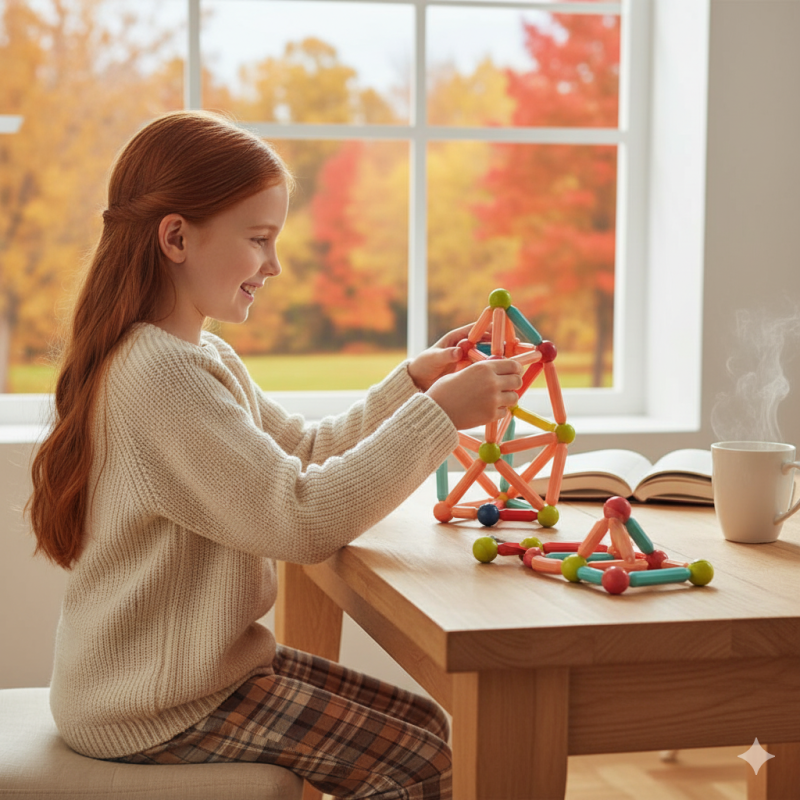
- Let them explore freely: Give your child unstructured time with no goals — that’s when real creativity begins.
- Model it yourself: Spend quiet time reading, crafting, or enjoying nature to show that slowing down can be rewarding.
Many parents also combine this approach with minimalist playroom ideas to reduce overstimulation and improve focus.
For more structured activities, see screen-free learning activities for toddlers.
The Benefits Go Beyond Playtime
The benefits of boredom for children extend into emotional development too. When kids have time to be still, they learn self-regulation and mindfulness. They start to appreciate small joys — like the sound of leaves outside or the feel of their favorite toy. According to Child Mind Institute, moments of boredom can actually help children develop creativity, self-esteem, and problem-solving skills by allowing their minds to wander.
You can also explore minimalist playroom ideas to create a calmer environment. By creating screen-free moments, parents nurture curiosity and balance, giving their children tools to handle life’s challenges with calm and creativity.
Simple Ways to Allow Healthy Boredom
Give your child short periods of unstructured time each day without screens or planned activities. At first, they may resist or complain. This is normal. Over time, children begin to create their own games, ideas, and stories. Start small — even 20 minutes of quiet, open time can make a difference. Avoid stepping in too quickly. Instead, give your child space to think, explore, and decide what to do next.
Conclusion
Boredom isn’t the absence of activity — it’s the presence of possibility.
Encouraging your child to experience slow, screen-free play helps them grow into creative, confident, and thoughtful individuals. So next time you hear, “I’m bored,” smile — their imagination is just getting started.
FAQ
Is boredom actually good for children?
Yes. The benefits of boredom for children include stronger creativity, improved problem-solving skills, emotional regulation, and independent thinking. Short periods of unstructured time encourage children to create their own ideas and explore play more deeply.
How much boredom is healthy for children?
Short daily periods of unstructured time — around 20 to 30 minutes — are often enough to support creativity and healthy development. The goal is to allow children space to explore rather than constantly filling every moment with activities.
Should parents fix boredom immediately?
No. Giving children time to work through boredom helps them develop independence, confidence, and problem-solving skills. Often, children create their most imaginative ideas after moving past the initial feeling of boredom.