

Wooden Tetris Puzzle Benefits: How Brain Games Help Kids Think Better
May
Introduction
Parents often look for toys that do more than simply keep children busy. Wooden Tetris puzzle benefits go far beyond entertainment because these simple brain games help children develop focus, creativity, and problem-solving skills through hands-on play. While many modern toys rely on screens and quick stimulation, wooden puzzles encourage children to slow down, think deeply, and explore different solutions.
Unlike passive entertainment, hands-on puzzles create opportunities for children to experiment, learn from mistakes, and build confidence naturally.
Why Wooden Tetris Puzzles Challenge the Brain
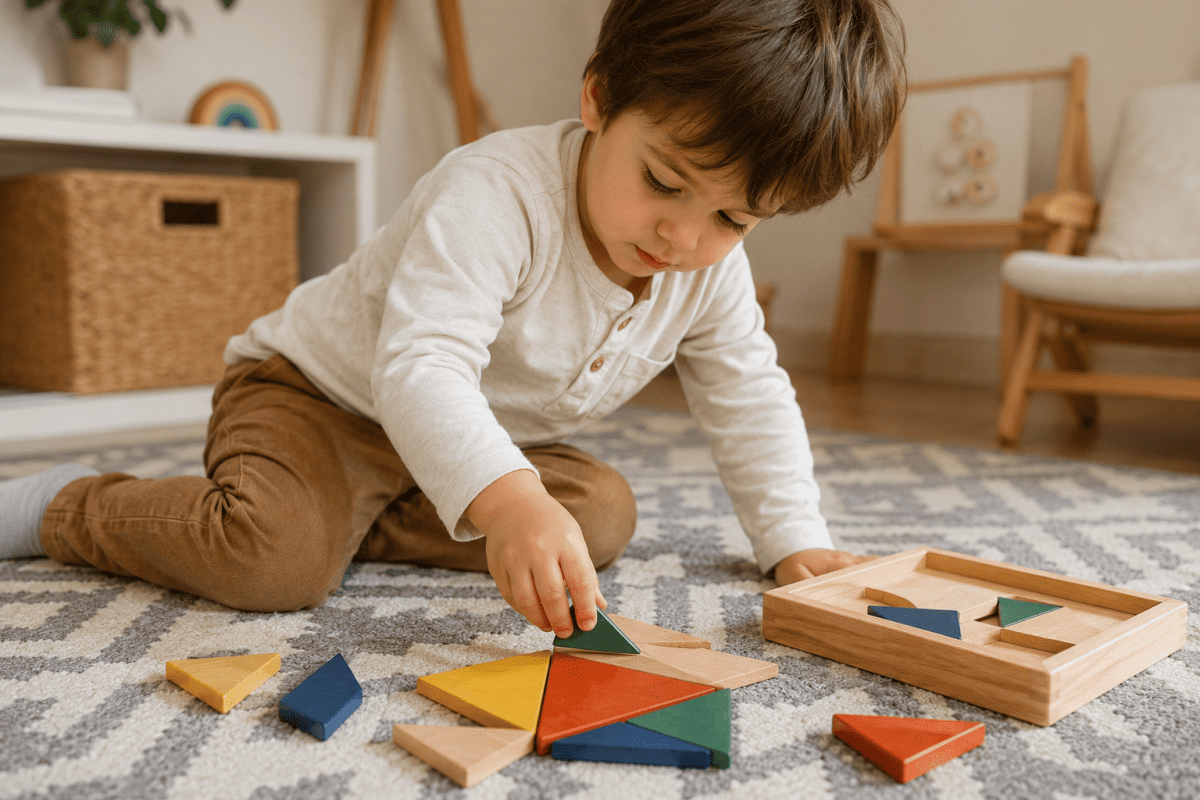
Wooden Tetris puzzles encourage children to think actively instead of passively receiving information.
Unlike toys with one correct outcome, these puzzles are open-ended. Children rotate shapes, experiment with possibilities, and discover patterns through play.
As children move pieces around, they naturally practice:
- spatial awareness
- visual processing
- concentration
- flexible thinking
- planning skills
These early thinking skills become important foundations for learning later in life.
Hands-on play experiences also support long-term cognitive growth, similar to how children benefit from experiences discussed in our guide about sensory toys for brain development.
Problem-Solving Skills Children Learn Through Puzzle Play
Children rarely solve a puzzle perfectly on the first attempt.
Instead, they test ideas, make mistakes, adjust their strategy, and try again.
That process matters.
When children repeatedly work through small challenges, they begin developing persistence and confidence.
These same problem-solving abilities also appear in many simple thinking activities at home, where children learn through experimentation rather than memorization.
Over time, puzzle play teaches children that mistakes are not failures — they are part of learning.
Wooden Tetris Puzzle Benefits Beyond Screen-Free Play
Many parents search for activities that reduce screen time without creating boredom.
Interestingly, children often become deeply engaged when challenges feel meaningful.
Unlike passive entertainment, wooden puzzles invite children to participate, think, and create.
Parents exploring screen free learning activities for toddlers often notice that puzzle toys naturally hold attention for longer periods.
In fact, fewer distractions frequently lead to deeper concentration.
A calm learning environment also connects closely with minimalist playroom ideas, where children focus better when they are not overwhelmed by too many choices.
How Puzzle Toys Strengthen Attention Span
Focus is not something children suddenly develop.
Like any skill, attention improves through practice.
When children work with puzzle pieces, they stay engaged while searching for patterns and solutions.
Activities that encourage sustained thinking can support the same developmental goals discussed in our article about attention span toys for kids.
Even short daily sessions help children gradually build patience and concentration.
Wooden Puzzles and Executive Function Skills
Executive function skills include planning, working memory, and self-control.
These abilities help children organize thoughts, solve problems, and manage tasks.
While many parents focus only on academic skills, research increasingly shows that executive function matters just as much.
Puzzle play naturally supports these skills because children must remember shapes, predict outcomes, and adjust strategies.
This aligns closely with our guide on executive function skills in early childhood, where purposeful play strengthens brain development.
Choosing the Right Wooden Tetris Puzzle
Not all puzzles work equally well.
When choosing a puzzle, look for:
- large child-friendly pieces
- safe non-toxic materials
- bright colors
- multiple play possibilities
- age-appropriate difficulty levels
Open-ended puzzles often remain interesting longer because children can create new designs and challenges over time.
Our Wooden Tetris Puzzle for Kids encourages independent exploration while supporting critical thinking and creativity through hands-on play.
Final Thoughts
Sometimes simple toys create the most meaningful learning experiences.
A wooden Tetris puzzle does more than entertain children for a few minutes. It helps them practice problem-solving, build focus, strengthen creativity, and develop confidence through experimentation.
As children play, rotate shapes, and search for solutions, they are building skills that support learning far beyond childhood.
Learning does not always require screens or complicated technology.
Sometimes it starts with a few wooden pieces and a curious mind.
FAQ
What are the benefits of a wooden Tetris puzzle?
Wooden Tetris puzzles help children improve problem-solving skills, concentration, creativity, and spatial awareness through hands-on play.
What age is best for a wooden Tetris puzzle?
Most wooden Tetris puzzles are suitable for children ages 3 and older, depending on the complexity and piece size.
Can puzzle toys improve concentration?
Yes. Puzzle activities encourage children to stay engaged and focus on completing a task, which gradually strengthens attention span.
Are wooden puzzles better than digital games?
Hands-on puzzles provide tactile experiences that encourage deeper engagement, creativity, and motor skill development.