A calm, practical guide for parents who want to help without pressure Many parents search for simple activities that support thinking skills at home because they quietly wonder if they are doing enough. In a world full of advice, school expectations, and online comparisons, it’s easy to feel unsure. However, the good news is that […]
Parents often believe that more toys mean more learning opportunities. But research and real-life experience show the opposite: too many toys can overwhelm children, reduce attention span, and limit meaningful play. A simple toy rotation strategy helps children focus better, play longer, and develop deeper learning skills — without buying anything new. I. Why Too […]
Introduction Many parents feel frustrated when their child quickly loses educational toys interest after just a few days. At first, the toy looks exciting. However, soon it stays on the shelf unused. As a result, parents start wondering whether the toy was a bad choice. In reality, children do not lose interest without reason. Instead, […]
Why Age 3 Is a Turning Point in Child Development At three years old, children stop playing randomly and begin playing with intention. Instead of only touching objects, they start comparing, sorting, and repeating actions. Because of this change, play becomes a learning process rather than simple entertainment. For example, a child may place shapes […]
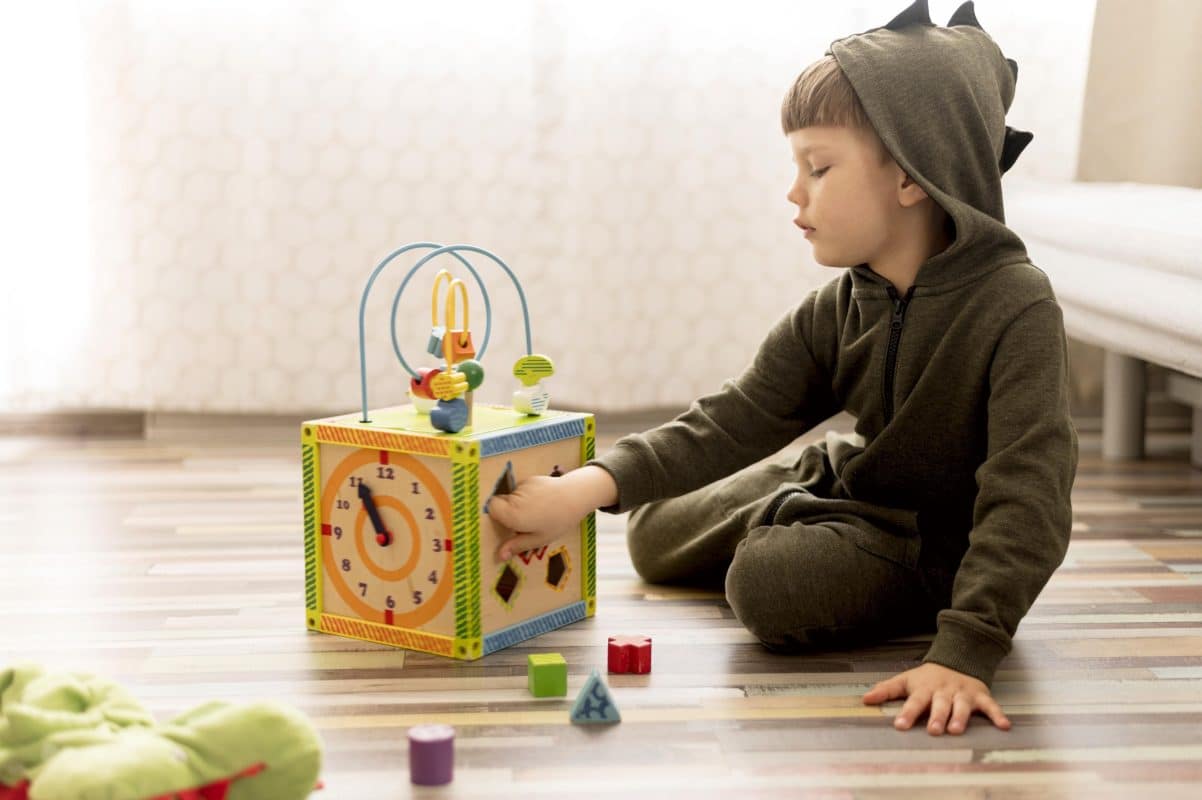
Introduction Learning toys for 2 years old are more than simple entertainment. At this age, children learn by touching, moving, stacking, and exploring everything around them. When play feels joyful and relaxed, children naturally enter a state of happy play where learning happens without pressure. Parents often notice that toddlers repeat the same activity many […]
Children learn best when learning feels like play. Fun learning activities help children build important skills naturally through hands-on experiences rather than pressure or memorization. Whether children are solving puzzles, building structures, or exploring sensory materials, meaningful play creates opportunities for stronger thinking, creativity, and independence. Parents today increasingly look for educational toys that support […]
Introdoction Learning maths through play helps children understand numbers in ways that feel natural and meaningful. Instead of memorizing symbols or repeating worksheets, children learn maths through movement, hands-on experiences, and exploration. Through puzzles, sorting activities, building toys, and everyday play, children gradually develop confidence while strengthening important thinking skills. Educational toys make maths feel […]
Screen-free educational toys are gaining renewed attention as more parents question the role of technology in early childhood. While smart toys and digital learning tools promise fast results, many families are discovering that real learning often happens without screens at all. Hands-on play, physical interaction, and simple materials continue to shape how children think, focus, […]
Artificial intelligence is no longer limited to screens, apps, or classrooms. Today, AI is quietly entering children’s playrooms through smart educational toys that promise personalized learning, adaptive challenges, and faster skill development. For many parents, however, this rapid shift raises an important question: are AI educational toys truly helping children learn, or are they simply […]
Introduction Educational toys for children are everywhere today, yet many parents feel frustrated when these toys fail to improve focus, learning, or behavior. Understanding why some educational toys fail children helps parents make smarter choices and avoid wasted money and disappointment.Educational toys fail children not because play-based learning is ineffective, but because many products are […]