

How Open-Ended Toys Help Children Become Better Problem Solvers
May
Introduction
Open-ended toys for problem solving help children think independently, explore different solutions, and develop critical thinking skills through play. Unlike toys with fixed outcomes, open-ended materials encourage experimentation, creativity, and decision-making. As children build, sort, design, and imagine, they learn how to solve challenges naturally—without pressure or instructions.
What Makes a Toy Open-Ended?
An open-ended toy can be used in multiple ways without a fixed outcome.
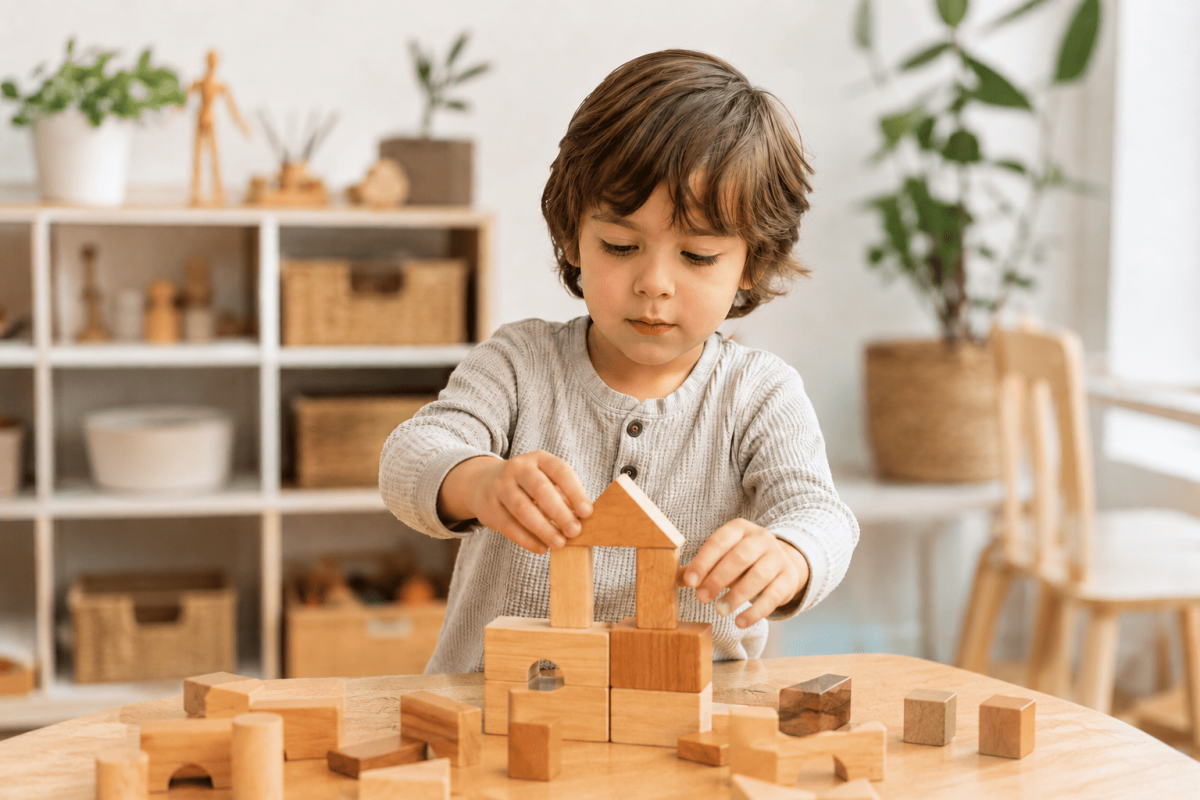
A set of wooden blocks can become a castle today, a bridge tomorrow, and a zoo the next day. Magnetic tiles might become a rocket ship, a house, or an imaginary city.
Because there is no single “correct” way to play, children remain in control of the experience.
This freedom encourages exploration and experimentation. Instead of following instructions, children create their own goals and develop strategies to achieve them.
Many families who embrace open-ended play also enjoy creating a calmer environment using our guide to minimalist playroom ideas, where fewer toys often lead to deeper and more meaningful play experiences.
Why Problem-Solving Skills Matter in Early Childhood
Problem-solving is much more than finding answers.
It teaches children how to:
- Analyze situations
- Test ideas
- Learn from mistakes
- Adapt to new challenges
- Think independently
These abilities support success in school, relationships, and everyday life.
When children encounter obstacles during play, they practice overcoming challenges in a low-pressure environment. Over time, this builds resilience and confidence.
Research consistently shows that children learn best when they actively participate in discovering solutions rather than simply receiving instructions.
How Open-Ended Toys Encourage Critical Thinking
Open-ended toys naturally create opportunities for critical thinking.
Imagine a child trying to build a tall tower from wooden blocks.
The tower falls.
Instead of being told what went wrong, the child experiments:
- Should the base be wider?
- Are some blocks more stable?
- Would a different design work better?
Each attempt teaches valuable lessons about cause and effect.
This process is very similar to the thinking children develop through puzzles for kids critical thinking, where persistence and logical reasoning become part of everyday play. As a result, they become more confident when tackling new tasks.
Unlike toys that provide instant answers, Open-ended toys encourage experimentation. In addition, they help children learn from mistakes without fear of failure.
Creativity and Problem-Solving Work Together
Many people think creativity and logic are separate skills.
In reality, they work together constantly.
When children imagine new ways to use materials, they generate possible solutions. When they test those ideas, they strengthen reasoning skills.
For example:
A child building a bridge with magnetic tiles may discover that certain shapes create stronger structures.
At the same time, they are practicing creativity, engineering concepts, and flexible thinking.
This combination of imagination and reasoning is one reason why many educators recommend STEM toys for kids as part of a balanced learning environment.
Learning Through Mistakes
One of the greatest benefits of open-ended toys is that they normalize mistakes.
There is no score.
There is no failure.
There is only experimentation.
When children realize that mistakes are part of learning, they become more willing to take risks and try new ideas.
This mindset supports long-term success because children learn to view challenges as opportunities rather than obstacles.
Parents often notice that children who engage in open-ended play become more patient and persistent over time.
Supporting Focus Through Meaningful Play
Many parents worry about short attention spans.
However, attention often depends on the quality of the activity rather than the child alone.
Open-ended toys encourage deeper concentration because children are actively involved in creating and solving.
Instead of waiting for entertainment, they become the creators of the experience.
This approach aligns closely with what we discussed in attention span toys for kids, where meaningful engagement helps children stay focused naturally without relying on screens or constant stimulation.
How Parents Can Support Problem-Solving at Home
Parents do not need special training to encourage problem-solving.
Small changes can make a big difference.
Ask Questions Instead of Giving Answers
Instead of solving problems immediately, try asking:
- What do you think might happen?
- Can you think of another way?
- What could you try next?
These questions encourage independent thinking.
Allow Time for Exploration
Children often need extra time to discover solutions. As a result resist the urge to intervene too quickly.
The learning happens during the struggle, not after the answer is given.
Celebrate Effort
Focus on persistence rather than outcomes.
Praise statements such as:
- “You kept trying.”
- “That was a creative idea.”
- “You found another solution.”
This builds confidence and motivation.
The Best Types of Open-Ended Toys for Problem Solving
Several categories of toys are especially effective.
Building Toys
Blocks, magnetic tiles, and construction sets encourage planning and experimentation.
Loose Parts Play
Natural materials such as stones, sticks, wooden rings, and fabric pieces inspire creativity and flexible thinking.
Logic and Spatial Toys
Tangrams, pattern blocks, and shape puzzles encourage children to visualize solutions and think strategically.
Sensory Materials
Many children also benefit from sensory toys for early childhood development, which support focus, exploration, and hands-on learning.
Long-Term Benefits of Open-Ended Play
The skills developed through open-ended play extend far beyond childhood.
Children who regularly engage in problem-solving play often develop:
- Greater confidence
- Stronger decision-making skills
- Better emotional regulation
- Increased creativity
- Improved adaptability
These qualities help children navigate school, friendships, and future challenges with greater independence.
Most importantly, they learn that they are capable of figuring things out for themselves.
Conclusion
Open-ended toys for problem solving offer far more than entertainment. Therefore they create opportunities for children to think, experiment, adapt, and grow.
Every tower that falls, every puzzle that takes multiple attempts, and every creative solution contributes to stronger cognitive skills and greater confidence.
By providing children with simple materials and the freedom to explore, parents can support the development of problem-solving abilities that will benefit them throughout life.
FAQ
What are open-ended toys?
Open-ended toys are toys that can be used in many different ways without a fixed outcome. Examples include building blocks, magnetic tiles, loose parts, and creative construction sets.
How do open-ended toys improve problem-solving skills?
They encourage children to experiment, test ideas, learn from mistakes, and discover solutions independently through play.
At what age can children start using open-ended toys?
Children can begin using simple open-ended materials during infancy and continue benefiting from them throughout childhood.
Are open-ended toys better than electronic toys?
Open-ended toys often promote deeper creativity, focus, and critical thinking because children actively direct the play experience themselves.
What are the best open-ended toys for preschoolers?
Building blocks, magnetic tiles, wooden construction sets, loose parts materials, and tangram puzzles are excellent choices for preschool-aged children.