

Sensory STEM Activities for Preschoolers: Simple Ways to Build Thinking Through Play
Nov
Introduction
Many parents want to support their child’s learning but are unsure where to begin. Fortunately, you do not need expensive tools or formal lessons. Sensory STEM activities for preschoolers provide a natural and engaging way to build thinking skills through everyday play.
At this age, children learn by exploring the world around them. They touch, test, repeat, and experiment. As a result, they gradually build the foundation for science, creativity, and problem-solving.
Why Sensory STEM Activities Are Powerful for Preschoolers
Preschool children are naturally curious. They want to touch objects, move materials, and understand how things work.
Because sensory activities involve hands-on exploration, they help children:
- Explore through experience
- Understand cause and effect
- Develop focus and patience
- Build early problem-solving skills
For this reason, many parents also explore sensory toys for early childhood development to support learning in a more structured way.
5 Simple Sensory STEM Activities for Preschoolers You Can Try at Home
1. Pouring and Measuring Activities
Start with cups and containers filled with water, rice, or beans. As children pour and transfer materials, they begin understanding balance, control, and volume.
In addition, this activity supports early science and math thinking.
2. Building and Testing Structures
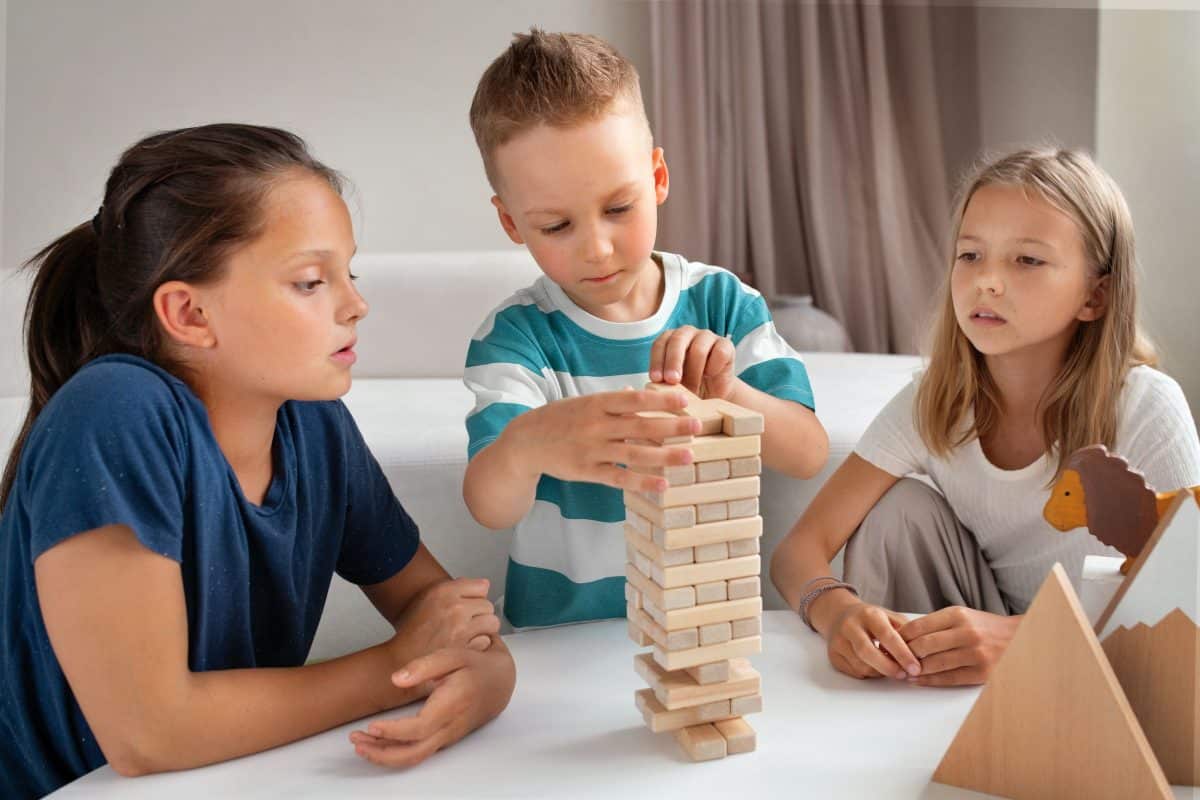
Try using blocks or everyday objects to build towers together. Eventually, towers fall—and that creates an opportunity for learning.
Children begin noticing patterns and testing solutions. This process supports the same thinking skills found in puzzles for kids critical thinking activities.
3. Sorting and Classifying Objects
Next, ask children to sort objects by size, color, or shape.
Although this seems simple, sorting strengthens observation skills and introduces early STEM concepts.
4. Texture Exploration Activities
Another easy activity involves different materials such as fabric, water, sand, or textured objects.
This type of sensory exploration also connects with sensory toys brain development guide and how children learn through touch.
5. Simple Problem-Solving Challenges
Finally, create fun challenges:
“How can we move water without spilling?”
“How can we make this tower stronger?”
As children test different ideas, they naturally develop STEM thinking skills.
Supporting Focus Through Sensory STEM Activities for Preschoolers
One of the biggest advantages of sensory learning is stronger focus.
Because children actively participate in the process, they often stay engaged longer. Over time, this can improve concentration and independent thinking.
Similarly, many parents search for attention span toys for kids when trying to build these skills naturally.
Creating the Right Environment at Home
The environment matters just as much as the activity itself.
To encourage deeper learning:
- Keep the play area simple
- Reduce distractions
- Offer only a few materials at once
- Allow repetition without interruption
In fact, many families notice positive changes after using minimalist playroom ideas to reduce overwhelm.
You can also try a toy rotation strategy to keep activities fresh without adding clutter.
The Role of Boredom in Learning
At first, boredom may seem like a problem. However, quiet moments often create new opportunities for creativity.
When children are not constantly entertained, they begin inventing games and creating ideas on their own.
This connects closely with benefits of boredom for children and the role unstructured play has in development.
Conclusion
Learning does not need to feel complicated.
With simple and hands-on experiences, children can build strong thinking skills naturally. Sensory STEM activities for preschoolers help support curiosity, focus, creativity, and problem-solving through everyday play.
FAQ
What are sensory STEM activities?
They are hands-on activities that combine sensory play with science, exploration, and early problem-solving skills.
Do I need special toys for STEM activities?
No. Many sensory STEM activities use simple household materials and everyday objects.
How often should children do sensory activities?
Short daily sessions of about 20–30 minutes are often enough to support healthy learning and development.