

Why Balancing Stones Frustrate Kids at First (And Why That’s a Good Thing)
Jun
Introduction
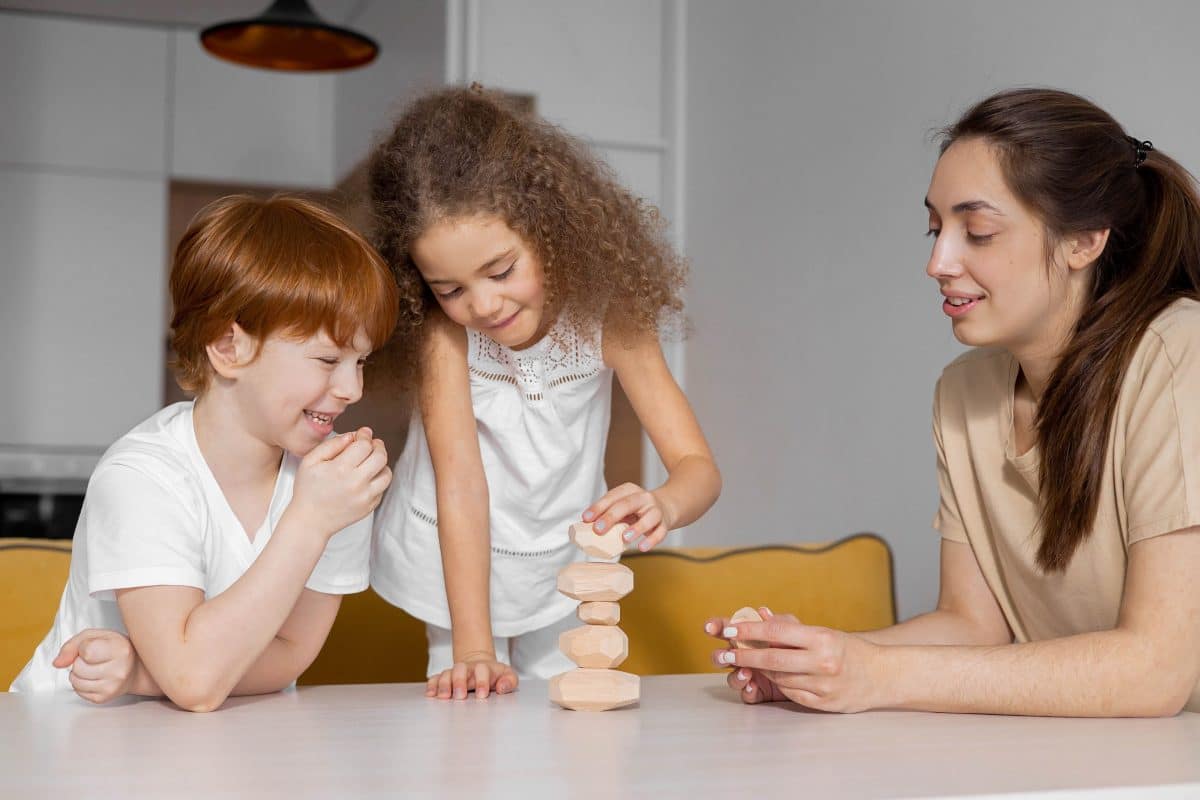
If you’ve ever given your child a set of balancing stones, you’ve probably seen the same reaction. They carefully place one stone on top of another, hold their breath for a second, and then everything comes crashing down.
The first response is often frustration.
Some children try again immediately. Others walk away after a few attempts. As parents, it can be tempting to step in and help. However, those small moments of struggle may actually be one of the most valuable parts of the learning process.
Balancing stones may look like simple stacking toys, yet they challenge children in ways many modern toys do not. Unlike toys that light up, talk, or provide instant rewards, balancing stones require patience, focus, and experimentation. Children must think carefully, adjust their strategy, and try again when things don’t work.
That is exactly why many Montessori educators and child development specialists value this type of open-ended play. While balancing stones can feel difficult at first, they help children develop important skills that support learning, confidence, and independence long after playtime ends.
Why Balancing Stones Feel Challenging
Many toys are designed to be easy. Children press a button, move a piece, or complete a simple action and receive immediate feedback.
Balancing stones work differently.
Each stone has a unique shape, weight distribution, and center of gravity. As a result, children cannot rely on memorized solutions. Instead, they must observe, predict, and adjust.
When a tower collapses, the child receives information.
They begin asking questions:
- Why did it fall?
- Which stone was unstable?
- What should I try differently?
- Would a larger base help?
Although children may not say these questions aloud, their brains are actively processing them.
This type of thinking supports many of the same skills developed through puzzles for kids critical thinking, but in a more physical and hands-on way.
The Hidden Value of Productive Frustration
Parents naturally want to protect children from frustration. However, not all frustration is harmful.
There is a difference between overwhelming frustration and productive frustration.
Productive frustration happens when a challenge is difficult but achievable. Children feel stretched without feeling defeated.
Balancing stones create exactly this kind of experience.
A tower falls.
The child tries again.
The tower falls again.
Eventually, they discover a better solution.
Every successful attempt teaches an important lesson:
“I can solve difficult problems if I keep trying.”
Over time, these experiences build resilience.
In fact, many of the same benefits discussed in executive function toys for kids come from activities that require persistence and self-correction. Children learn to manage emotions, control impulses, and stay focused even when success is not immediate.
How Balancing Stones Improve Focus and Attention
One reason many children struggle with concentration today is that they are surrounded by constant stimulation.
Screens move quickly.
Apps provide instant feedback.
Electronic toys often do the work for the child.
Balancing stones slow everything down.
Children must pay close attention to:
- Shape
- Position
- Weight
- Balance
- Movement
Even a small adjustment can change the outcome.
Because success depends on careful observation, balancing stones naturally strengthen sustained attention.
Parents looking for attention span toys for kids are often surprised by how long children will stay engaged with a simple stacking challenge once they become invested in the process.
Furthermore, because there is no single correct solution, children remain curious about what might happen next.
Problem-Solving Through Trial and Error
Many educational experiences focus on getting the right answer.
Balancing stones focus on finding an answer.
That distinction matters.
When children build with balancing stones, they experiment constantly.
They test ideas.
They make predictions.
They evaluate results.
Then they modify their approach.
This is the foundation of problem-solving.
Rather than following instructions, children become active thinkers.
In many ways, balancing stones are a natural extension of open-ended toys for problem solving because they encourage exploration rather than memorization.
The goal is not perfection.
The goal is learning through discovery.
Building Fine Motor Skills and Coordination
Although balancing stones are often discussed as cognitive toys, they also provide important physical benefits.
Each stone requires careful placement.
Children must coordinate their eyes and hands while controlling small movements.
As they build, they develop:
- Hand strength
- Finger control
- Precision
- Coordination
- Spatial awareness
These abilities support everyday activities such as drawing, writing, cutting, dressing, and self-care tasks.
Unlike worksheets or digital games, balancing stones allow children to strengthen these skills through meaningful play.
Why Montessori Educators Love Balancing Stones
Montessori environments often emphasize simple materials that encourage concentration and independence.
Balancing stones fit these principles perfectly.
They are:
- Open-ended
- Self-correcting
- Screen-free
- Creative
- Developmentally appropriate
Most importantly, balancing stones allow children to learn without constant adult instruction.
The materials provide feedback naturally.
If a structure is unstable, it falls.
If a strategy works, the structure stands.
This process encourages independent thinking while reducing reliance on external rewards.
For families interested in creating a more intentional learning environment, balancing stones work especially well alongside ideas from Montessori Made Simple: How to Create a Learning Hub at Home.
Creativity Beyond Stacking
Many parents assume balancing stones are only useful for building towers.
In reality, children often discover dozens of ways to use them.
Depending on age and imagination, balancing stones can become:
- Roads
- Bridges
- Mountains
- Animals
- Pretend food
- Sorting materials
- Pattern-making tools
Because there are no fixed rules, children can reinvent the activity repeatedly.
This flexibility is one reason balancing stones remain interesting long after many traditional toys lose their appeal.
Moreover, open-ended materials encourage the same creative thinking supported by fun learning activities that help children develop confidence and independence.
Why Fewer Toys Often Lead to Better Play
Interestingly, balancing stones also support a principle found in many minimalist play environments.
When children have fewer, more versatile materials, they often play more deeply.
Rather than jumping from toy to toy, they spend longer exploring possibilities.
This connects closely with both minimalist playroom ideas and the benefits of boredom for children.
When children are not constantly entertained, they begin creating their own challenges.
That is where imagination starts to flourish.
Choosing the Right Age for Balancing Stones
Balancing stones can grow with a child over several years.
Toddlers may begin by:
- Sorting stones by size
- Exploring textures
- Making simple stacks
Preschoolers often start experimenting with balance and structure.
Older children create increasingly complex designs while testing engineering concepts and problem-solving strategies.
Because the challenge naturally evolves, balancing stones remain relevant longer than many age-specific toys.
Final Thoughts
At first glance, balancing stones may seem like a simple stacking toy.
However, beneath that simplicity lies an incredible opportunity for growth.
Every fallen tower teaches persistence.
Every successful structure builds confidence.
Every challenge strengthens focus, coordination, and problem-solving skills.
Most importantly, balancing stones remind children that learning does not happen only when things go right. Sometimes the most valuable lessons come from trying again after things fall apart.
And that is a skill children will carry far beyond the playroom.
FAQ
What are wooden balancing stones?
Wooden balancing stones are open-ended stacking toys that challenge children to build, balance, and experiment with different structures. They encourage creativity while developing coordination and problem-solving skills.
At what age can children use balancing stones?
Most balancing stones are suitable for children aged 3 years and older. Younger children can explore larger balancing stones with adult supervision, while older children often create more complex balancing challenges.
How do balancing stones help child development?
Balancing stones support fine motor skills, hand-eye coordination, spatial awareness, patience, and critical thinking. As children test different arrangements, they learn through trial and error and develop persistence.
Do balancing stones improve focus and concentration?
Yes. Building stable structures requires attention and careful observation. Because children stay engaged in solving a physical challenge, balancing stones naturally encourage longer periods of focused play.
Are balancing stones considered Montessori toys?
While not official Montessori materials, balancing stones are often considered Montessori-inspired because they promote hands-on learning, independence, concentration, and open-ended exploration.