

Screen-Free Educational Toys: Why Hands-On Play Builds Better Learning
Feb
Screen-free educational toys are gaining renewed attention as more parents question the role of technology in early childhood. While smart toys and digital learning tools promise fast results, many families are discovering that real learning often happens without screens at all. Hands-on play, physical interaction, and simple materials continue to shape how children think, focus, and grow.
In recent years, parents have noticed a pattern. Children may appear entertained by smart toys, yet struggle to concentrate, regulate emotions, or engage deeply. This realization has led many families back to screen-free educational toys that support learning through play rather than passive interaction. Screen-free activities like puzzles for kids critical thinking help children build deeper focus.
This article explores why screen-free educational toys remain one of the most effective tools for early learning and how hands-on play builds stronger foundations for children.
What Are Screen-Free Educational Toys?
Screen-free educational toys are toys that do not rely on digital screens, apps, or constant electronic feedback. Instead, they encourage children to learn through touch, movement, problem-solving, and imagination.
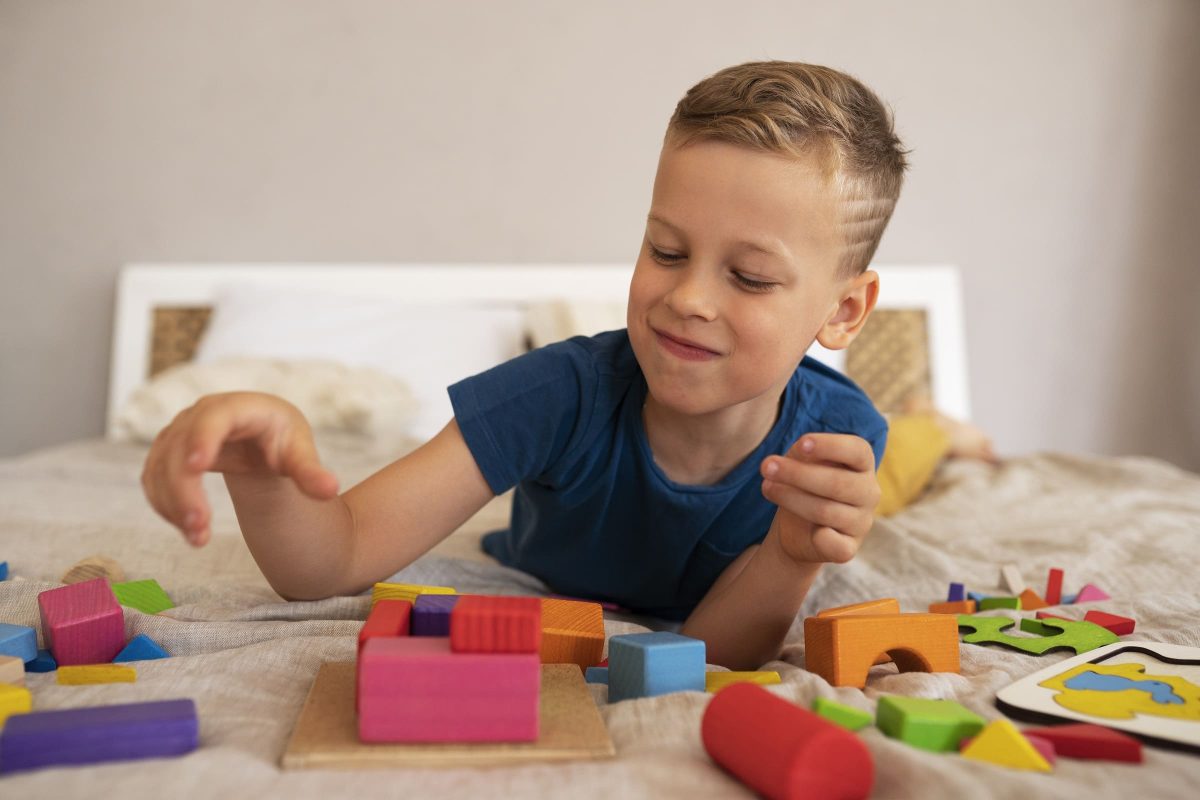
Examples include wooden puzzles, building blocks, sorting games, Montessori materials, sensory toys, and open-ended play sets. These toys invite children to participate actively rather than react to instructions or animations.
Because screen-free educational toys do not guide every step, children learn to think independently and make decisions on their own.
Why Parents Are Moving Away from Screens
Many parents initially turn to smart toys hoping to accelerate learning. However, concerns often arise over time.
One major concern is attention. Screen-based toys frequently stimulate children with rapid sounds, lights, and responses. As a result, children may become dependent on constant stimulation and lose interest quickly when it disappears.
Another issue is emotional regulation. Children who spend long periods interacting with screens may struggle to manage frustration, boredom, or transitions. Screen-free play, in contrast, allows children to experience small challenges and learn patience naturally.
Additionally, parents are increasingly aware that early childhood is a critical period for brain development. During these years, physical interaction with the environment plays a key role in shaping neural connections.
How Hands-On Play Supports Real Learning
Hands-on play activates multiple senses at once. When children touch, move, build, and manipulate objects, they engage their brain in deeper ways than passive observation ever could.
For example, when a child works with a wooden puzzle, they practice spatial reasoning, problem-solving, and persistence. Each attempt strengthens memory and attention, even if the child makes mistakes along the way.
Screen-free educational toys also support repetition. Children naturally return to the same activity, refining their skills over time. This repetition is essential for mastery and long-term learning.
Screen-Free Learning and Executive Function Skills
Executive function skills include planning, working memory, self-control, and flexible thinking. These skills develop gradually through experience, not instruction alone.
Screen-free educational toys help build these abilities by allowing children to:
- Decide how to approach a task
- Remember steps or patterns
- Adjust strategies when something doesn’t work
- Manage frustration without instant rewards
Unlike smart toys that often provide immediate correction, hands-on toys allow children to think through problems independently. This process strengthens confidence and resilience.
Montessori Philosophy and Screen-Free Play
Montessori education has long emphasized the importance of hands-on, purposeful play. Montessori toys are carefully designed to isolate specific skills, helping children focus without distraction.
For instance, a simple matching activity may seem basic, yet it supports concentration, coordination, and independence. Because the materials are self-correcting, children can learn from their mistakes without external guidance.
Screen-free educational toys aligned with Montessori principles encourage children to explore at their own pace, fostering intrinsic motivation rather than external rewards.
Creativity Thrives Without Screens
Creativity does not come from instructions; it comes from freedom. Screen-free toys provide open-ended possibilities that allow imagination to flourish.
Building blocks can become towers, roads, or stories. Sorting objects can turn into games invented by the child. This flexibility helps children develop creative thinking and problem-solving skills that extend beyond playtime.
In contrast, many screen-based toys limit creativity by offering fixed outcomes or scripted responses. When every action has a predefined result, imagination has little room to grow.
Social and Emotional Benefits of Screen-Free Play
Screen-free educational toys also support social development. When children play with physical toys, they are more likely to engage with others, share materials, and communicate ideas.
These interactions help children practice empathy, cooperation, and emotional expression. Even solo play with screen-free toys supports emotional growth by teaching children how to manage challenges independently.
Over time, these experiences contribute to stronger emotional regulation and self-confidence.
Screen-Free Toys and Focus in Early Childhood
Focus is not something children are born with; it develops through practice. Screen-free educational toys naturally support this development by requiring sustained attention.
Because these toys do not constantly reset the experience, children must stay engaged to make progress. This encourages longer play sessions and deeper concentration.
Parents often notice that children playing with screen-free toys become calmer and more absorbed compared to screen-based activities that quickly exhaust attention.
Choosing the Right Screen-Free Educational Toys
Not all screen-free toys are equally effective. Choosing the right ones involves understanding a child’s age, interests, and developmental needs.
Effective screen-free educational toys typically:
- Are simple in design
- Encourage active participation
- Allow multiple ways to play
- Grow with the child over time
Natural materials such as wood often provide better sensory feedback and durability, enhancing the overall play experience.
Screen-Free Play in a Technology-Driven World
Living in a digital world does not mean rejecting technology entirely. Instead, many families are learning to create balance.
Screen-free educational toys provide a foundation for learning that technology can complement later. When children develop strong focus, problem-solving, and self-regulation skills early on, they are better prepared to use technology thoughtfully in the future.
This balanced approach helps children see technology as a tool, not a source of constant stimulation.
Why Screen-Free Educational Toys Align With Long-Term Learning
Long-term learning depends on curiosity, persistence, and independent thinking. Screen-free educational toys nurture these qualities by respecting the child’s natural learning process.
Rather than delivering information, these toys invite discovery. Children learn not just what to think, but how to think.
As a result, screen-free play supports academic readiness, emotional resilience, and lifelong learning habits.
Final Thoughts
Screen-free educational toys are not a step backward. They are a return to what has always worked. In a world filled with digital noise, hands-on play offers children the space they need to focus, explore, and grow.
By choosing screen-free educational toys, parents invest in deeper learning, stronger attention, and healthier development. The most powerful learning tools are often the simplest ones—those that invite children to play, think, and discover at their own pace.