

Why Kids Get Bored Fast and Which Educational Toys Really Help
Dec
Introduction
Many parents buy a new toy only to watch their child lose interest within a few minutes. One day a toy feels exciting, and the next day it sits untouched on a shelf.
Understanding why kids get bored fast is important because boredom is not always a sign of short attention spans. In many cases, it reflects the type of toys children are given and how those toys engage their developing brains.
In this guide, we’ll explore why some toys lose their appeal quickly, which educational toys keep children engaged longer, and how parents can support deeper, more meaningful play.
Why Do Kids Get Bored So Quickly?
Children’s brains are still developing their attention systems. As a result, they naturally seek stimulation, challenge, and novelty. However, not all stimulation is helpful.
Many modern toys rely on flashing lights, loud sounds, or automatic responses. Although these toys feel exciting at first, they require very little effort from the child. Consequently, the brain receives stimulation without engagement, which leads to faster boredom.
In contrast, toys that require thinking, movement, and decision-making activate multiple areas of the brain. Because children must participate actively, they stay engaged for longer periods.
The Difference Between Entertainment Toys and Educational Toys
Understanding this difference is key for parents who want to support focus and learning.
Entertainment toys perform for the child. Educational toys invite the child to perform.
Entertainment toys often:
- Have one outcome
- Respond automatically
- End the play quickly
Educational toys that help kids focus usually:
- Have multiple possible outcomes
- Require hands-on interaction
- Encourage trial and error
- Grow with the child’s abilities
Because of this, educational toys naturally support longer attention spans and deeper learning experiences.
Which Educational Toys Help Kids Focus the Most?
Not all educational toys are equal. Some are especially effective at reducing boredom and improving focus.
Montessori Toys That Encourage Deep Concentration
Montessori-inspired toys are designed to isolate one skill at a time. This simplicity helps children concentrate without distraction.
Examples include:
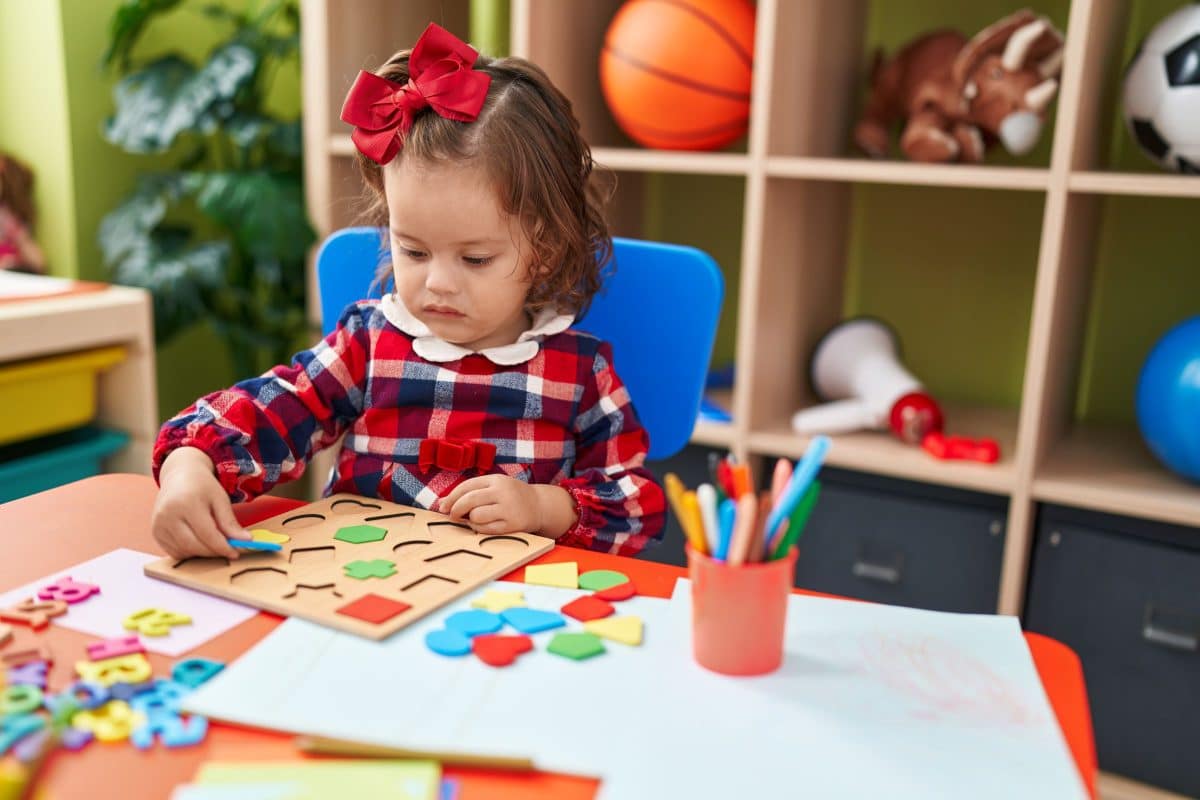
- Shape sorters
- Matching boards
- Practical life tools like lacing or pouring sets
These toys support independence and repetition. As a result, children enter a calm, focused state known as “flow.” This approach is similar to the principles discussed in our guide to Montessori toys for ages 3–5, where children learn through repetition, concentration, and self-directed exploration.
Puzzles and Logic Games That Build Patience
Puzzles are one of the strongest tools for sustained attention. Each attempt requires planning, spatial reasoning, and persistence.
When children work on puzzles, they learn that focus leads to success. Over time, this builds frustration tolerance and confidence.
Sensory Toys That Calm the Nervous System
Some children become bored because they are overstimulated, not under-stimulated. In these cases, sensory toys help regulate the nervous system. Many parents are surprised to learn that sensory toys for brain development and focus can improve attention not by adding stimulation, but by helping children process it more effectively.
Sensory toys that support focus include:
- Textured blocks
- Fidget tools with resistance
- Sensory bins with scoops and natural materials
Because these toys provide calming input, children can focus more effectively afterward.
Open-Ended Toys That Grow With the Child
Open-ended toys do not have a single “right” way to play. Instead, they adapt to the child’s imagination and skill level.
Examples include:
- Building blocks
- Magnetic tiles
- Loose parts play sets
These toys reduce boredom because the play experience changes every time. This is one reason why open-ended toys for problem solving remain engaging for years, allowing children to create new challenges as their skills grow.
Moreover, they support creativity, planning, and sustained engagement.
How Educational Toys Build Attention Over Time
Focus is not something children either have or do not have. It is a skill that develops gradually.
Educational toys that help kids focus support this development by:
- Encouraging longer play sessions
- Rewarding effort instead of speed
- Allowing mistakes without failure
- Promoting repetition and mastery
As children practice these skills through play, they naturally transfer them to other areas such as reading, classroom learning, and daily routines.
Signs a Toy Is Causing Boredom Instead of Learning
Parents often blame the child when boredom appears. However, the toy itself is usually the issue.
A toy may cause boredom if:
- The child finishes playing within minutes
- There is nothing new to explore
- The toy works the same way every time
- The child becomes restless or frustrated quickly
In contrast, educational toys that truly help focus invite children back again and again.
Choosing the Right Toy Based on Your Child’s Age
Age-appropriate challenge is essential. If a toy is too easy, boredom appears. If it is too difficult, frustration takes over.
Educational Toys by Age
Ages 1–2
Simple shape sorters, stacking toys, and sensory materials help toddlers stay engaged while building basic problem-solving skills.
Ages 3–4
Matching games, wooden puzzles, and Montessori activities encourage concentration and independent learning.
Ages 5+
Logic puzzles, magnetic building sets, and STEM challenges provide enough complexity to keep children interested for longer periods.
Matching the toy to the child’s developmental stage ensures that focus grows naturally through play.
Long-Term Benefits of Focused, Meaningful Play
When children regularly engage with educational toys that help kids focus, they develop skills that last far beyond childhood.
These benefits include:
- Stronger attention span
- Better emotional regulation
- Improved problem-solving skills
- Greater independence and confidence
In fact, many of these benefits overlap with what researchers describe when examining the benefits of boredom for children, where unstructured play encourages creativity and independent thinking.
Most importantly, children learn that learning itself can be enjoyable.
Conclusion: Helping Kids Focus Starts With the Right Toys
Boredom is not always something that needs to be fixed. Sometimes it is valuable information. When children lose interest quickly, the toy may not be providing enough challenge, creativity, or meaningful interaction.
By choosing educational toys that encourage exploration, problem-solving, and open-ended play, parents can help children stay engaged longer while building skills that support learning for years to come.
FAQ
Why do children get bored with toys so quickly?
Many toys provide instant entertainment but very little challenge. Children tend to stay engaged longer when toys encourage problem-solving, creativity, and hands-on exploration.
Can educational toys improve attention span?
Yes. Educational toys that require focus, repetition, and active participation can gradually strengthen a child’s ability to concentrate for longer periods.
Are screen-based toys more engaging than traditional toys?
Screen-based toys may capture attention quickly, but hands-on educational toys often support deeper and longer-lasting engagement because children actively participate in the learning process.
What types of toys help prevent boredom?
Open-ended toys, puzzles, building sets, sensory toys, and Montessori-inspired activities are among the best options because they can be used in multiple ways as children grow.
Is boredom actually good for children?
Yes. Short periods of boredom can encourage creativity, independent thinking, and problem-solving when children are given the opportunity to create their own play experiences.