

Why Does My Child Only Dump Toys Instead of Playing? What Parents Should Know
Jul
Why Dumping Toys Is Actually a Developmental Experiment
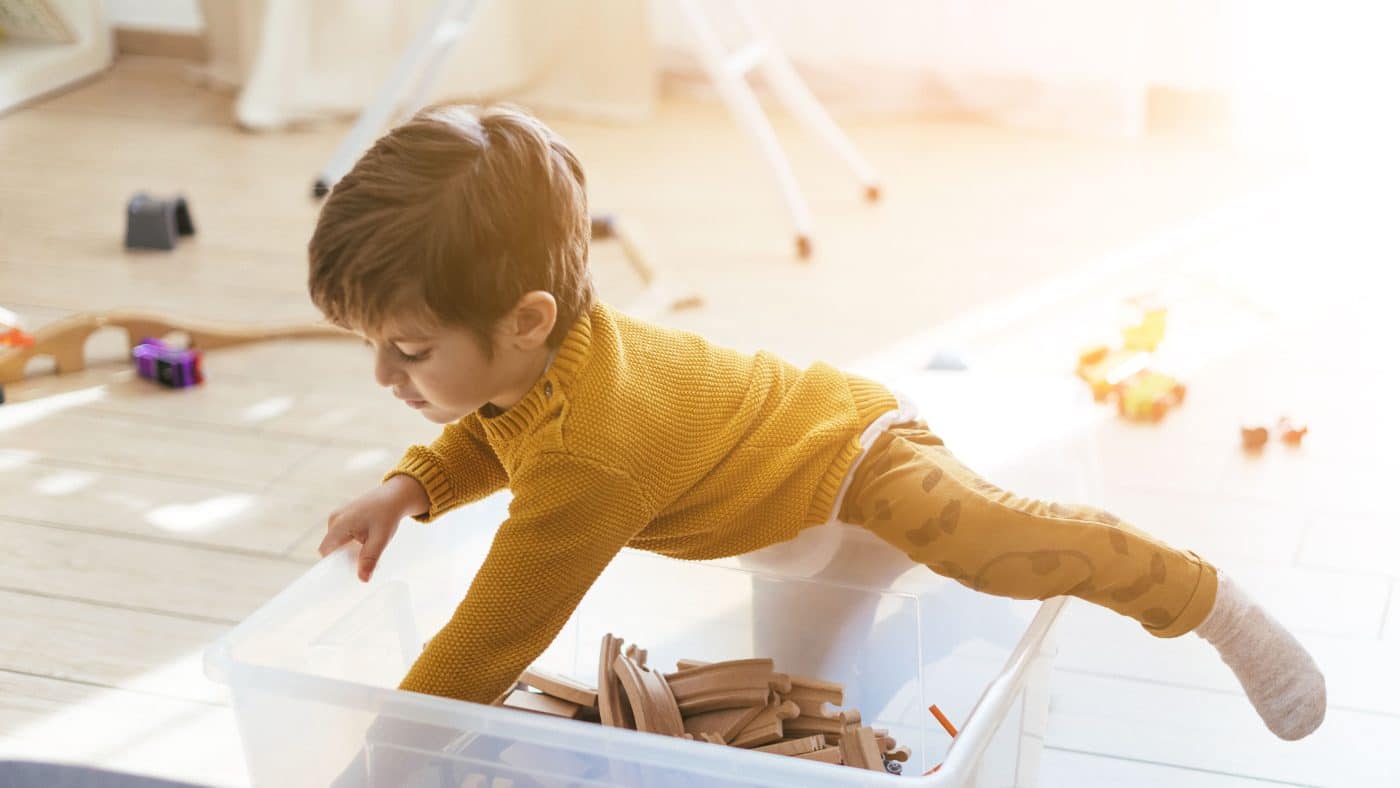
From an adult’s perspective, dumping a basket of toys onto the floor often looks random. The room becomes messy, the child walks away, and parents are left wondering why they bothered organizing everything in the first place.
However, young children experience the situation very differently.
For them, emptying a container is rarely about creating a mess. Instead, it is an experiment.
Every time a toddler tips over a basket, they are collecting information. They observe how objects move, how different materials make different sounds, how heavy items fall compared to lighter ones, and how the environment changes after their action. Although adults may overlook these moments, children are actively testing ideas about the world around them.
Developmental psychologists often describe early childhood as a period of constant experimentation. Children do not learn primarily through explanations—they learn through direct interaction. Dumping toys allows them to see immediate cause and effect, and that makes the activity surprisingly rewarding.
This is one reason why a child may repeat the same action over and over again.
Rather than thinking, “I already emptied the basket,” they are thinking, “What happens if I do it again?”
Interestingly, this repetitive experimentation is closely connected to the same learning process discussed in Why Some Kids Love Repetition: The Hidden Science Behind Playing the Same Toy Again and Again. As children repeat familiar actions, their brains become more efficient at recognizing patterns and predicting outcomes.
The 5 Hidden Skills Children Practice When They Dump Toys
What looks like simple dumping is often supporting several developmental abilities at the same time.
1. Understanding Cause and Effect
One of the earliest scientific lessons children discover is that their actions produce predictable results.
When they lift a basket…
…everything falls.
When they push harder…
…the toys spread farther.
When they shake the container…
…the sounds become louder.
These tiny discoveries help children understand that they can influence their environment. Later, this understanding supports problem-solving, reasoning, and independent learning.
Children who frequently experiment with cause and effect often become more confident when approaching new challenges because they expect their actions to produce meaningful results.
2. Building Spatial Awareness
Dumping toys creates a completely different visual environment.
Instead of seeing objects stacked neatly inside a box, children suddenly see them spread across a larger space.
Without realizing it, they begin asking questions such as:
- Which toy rolled the farthest?
- Which one stayed close?
- Which objects landed together?
- Which shapes fit beside each other?
These observations strengthen spatial reasoning, an important skill for mathematics, engineering, construction play, and even reading later in childhood.
Activities involving wooden logic puzzles, building blocks, and geometric matching continue strengthening these same abilities because they encourage children to mentally organize objects before moving them.
3. Developing Classification Skills
Adults usually organize toys by category.
Children often create completely different categories.
A toddler might place:
- all the round toys together,
- every red object in one pile,
- wooden toys on one side,
- soft toys somewhere else.
Although these groupings may appear random, they represent early classification skills.
Sorting objects based on shared characteristics is one of the foundations of logical thinking.
This is why activities like Montessori Eggs Toy: Why Geometric Eggs Are Perfect for Toddler Learning naturally build on behaviors that first appear during everyday dumping and sorting play.
4. Strengthening Fine Motor Coordination
Emptying containers requires surprisingly precise movements.
Children grip baskets…
adjust their wrists…
control the speed of pouring…
pick up dropped pieces…
and repeat the sequence dozens of times.
Each movement strengthens the small muscles of the hands and fingers that later support writing, drawing, cutting with scissors, and self-care skills.
Fine motor development rarely happens during formal lessons.
Instead, it grows through repeated everyday activities that feel like play.
For this reason, many occupational therapists encourage opportunities for carrying, pouring, transferring, and organizing objects instead of focusing only on worksheets or pencil activities.
5. Practicing Independent Decision-Making
Perhaps the most overlooked benefit is decision-making.
Once the toys are spread across the floor, children suddenly have choices.
Which toy should I touch first?
Which one looks interesting today?
Should I build something?
Should I sort them?
Should I stack them?
Should I pretend?
Rather than following adult instructions, they begin making their own decisions.
This type of self-directed exploration closely resembles the principles behind Montessori learning, where children are encouraged to choose meaningful activities independently.
In fact, independent decision-making develops more naturally when children regularly experience open-ended toys for problem solving, because there is no single “correct” way to play.
When Toy Dumping Is Completely Normal
For most toddlers, dumping toys is a normal part of development.
In fact, children between roughly 12 months and 3 years often learn more by taking objects out than by putting them back in. They are discovering how containers work, how objects relate to one another, and how their own actions change the environment.
This stage usually appears alongside other exploratory behaviors, such as opening cupboards, filling containers with random objects, stacking household items, or moving toys from one place to another.
Although these behaviors may seem repetitive, they all support the same goal: understanding the physical world.
Parents sometimes feel pressure to stop this behavior because it creates extra cleaning. However, if the child remains curious, engaged, and calm, toy dumping is usually a sign of healthy exploration rather than misbehavior.
When Parents Should Pay Closer Attention
While dumping toys is usually normal, context matters.
It may be worth observing more carefully if a child:
- never interacts with the toys after dumping them,
- becomes extremely distressed whenever the activity is interrupted,
- shows no interest in exploring objects individually,
- repeats the same action for long periods without any variation,
- or loses previously developed play skills.
These situations do not automatically indicate a developmental problem.
Children may be tired, overstimulated, anxious, or simply seeking sensory input.
Rather than jumping to conclusions, look for patterns over several weeks instead of focusing on a single day.
If concerns continue across different environments and affect daily life, discussing them with your pediatrician or child development specialist can provide reassurance and guidance.
Why Some Educational Toys Get Dumped More Than Others
Interestingly, children do not dump every toy for the same reason.
Sometimes the toy itself influences the behavior.
Large collections of small pieces often invite children to spread everything across the floor because they want to see all the available options before choosing where to begin.
At other times, children dump toys because they cannot easily see what is inside the container.
Once everything becomes visible, they finally feel ready to choose.
This is one reason why many Montessori environments display toys on low, open shelves instead of storing everything inside deep plastic boxes.
When children can clearly see each activity, they often spend less time searching and more time playing.
You may notice a similar improvement after using a toy rotation strategy, where only a small number of carefully selected toys remain available at one time. Fewer visible choices often lead to deeper concentration and more meaningful play.
How Parents Can Respond Without Saying “Stop Making a Mess”
Most parents have said it at least once:
“Please don’t dump everything on the floor.”
Although this reaction is understandable, it rarely teaches children what we hope.
Instead, try responding with curiosity before correction.
You might ask:
“I wonder what you’re looking for.”
“Which toy caught your eye?”
“Would you like to build something with these?”
These questions help shift the child’s attention from simply emptying the container toward exploring the objects themselves.
Children feel understood rather than corrected, making it much easier to guide their play naturally.
Turning Toy Dumping Into Meaningful Learning
Instead of stopping the behavior immediately, parents can gently extend it into richer play experiences.
For example, after the toys are on the floor, invite your child to:
- group similar objects together,
- find everything made of wood,
- build a tower using selected pieces,
- create a pretend story with several toys,
- arrange objects from biggest to smallest,
- or make simple patterns using colors and shapes.
These activities introduce classification, sequencing, visual discrimination, and early mathematical thinking without changing the playful atmosphere.
If your child enjoys arranging objects into groups, they may also enjoy activities involving shape matching, wooden logic puzzles, or open-ended construction toys, all of which gradually strengthen the same thinking skills.
Rather than viewing the dumped toys as a mess to clean up, think of them as materials waiting for the next stage of exploration.
Should Children Always Put Toys Away?
Yes—but timing matters.
Expecting children to clean up before they have finished exploring often creates unnecessary conflict.
Instead, allow enough uninterrupted play first.
Once your child appears finished, involve them in the clean-up process rather than doing it yourself.
Young children usually respond better when clean-up feels like another activity instead of a punishment.
Simple phrases such as:
“Let’s help the animals find their home.”
or
“Can we put all the red blocks back first?”
turn organising into another opportunity for learning.
Over time, children begin understanding that both exploring and tidying are natural parts of play.
Final Thoughts
A child who dumps toys is not necessarily being careless, naughty, or uninterested.
More often, they are doing exactly what young brains are designed to do: experimenting, observing, comparing, and learning through action.
As parents, it is easy to focus on the mess we can see.
However, the most important learning is often invisible.
Each container emptied, each object compared, and each decision made helps build the foundations for problem-solving, spatial reasoning, independence, and curiosity.
The goal is not to prevent children from exploring.
The goal is to guide that exploration so that curiosity gradually grows into purposeful play.
When we begin seeing toy dumping as part of learning instead of simply bad behavior, both children and parents enjoy playtime much more.
FAQ
Q1. Why does my child dump toys instead of playing with them?
A: Many children dump toys because they are exploring concepts like cause and effect, sorting, movement, and object relationships. This behavior is often a normal part of development.
Q2. Is dumping toys a sign of autism or ADHD?
A: Not by itself. Dumping toys is common in typical development. However, if it is the only type of play and is combined with other developmental concerns, it may be worth discussing with a healthcare professional.
Q3. Should I stop my child from dumping toys?
A: Usually no. Instead of stopping the behavior immediately, provide opportunities for exploration while gradually encouraging more purposeful play.
Q4. How can I encourage my child to play after dumping toys?
A: Offer simple invitations such as sorting by color, stacking objects, or placing items into containers. Avoid taking over the activity.
Q5. Which toys are best for children who enjoy dumping objects?
A: Toys that involve filling, emptying, sorting, matching, and open-ended exploration—such as object permanence boxes, matching eggs, stacking stones, and shape sorters—work particularly well.