

Why Some Children Struggle with Logic Puzzles (And What Parents Can Do)
Jun
Introduction
Many parents are surprised when a child who seems bright, curious, and capable shows little interest in logic puzzles.
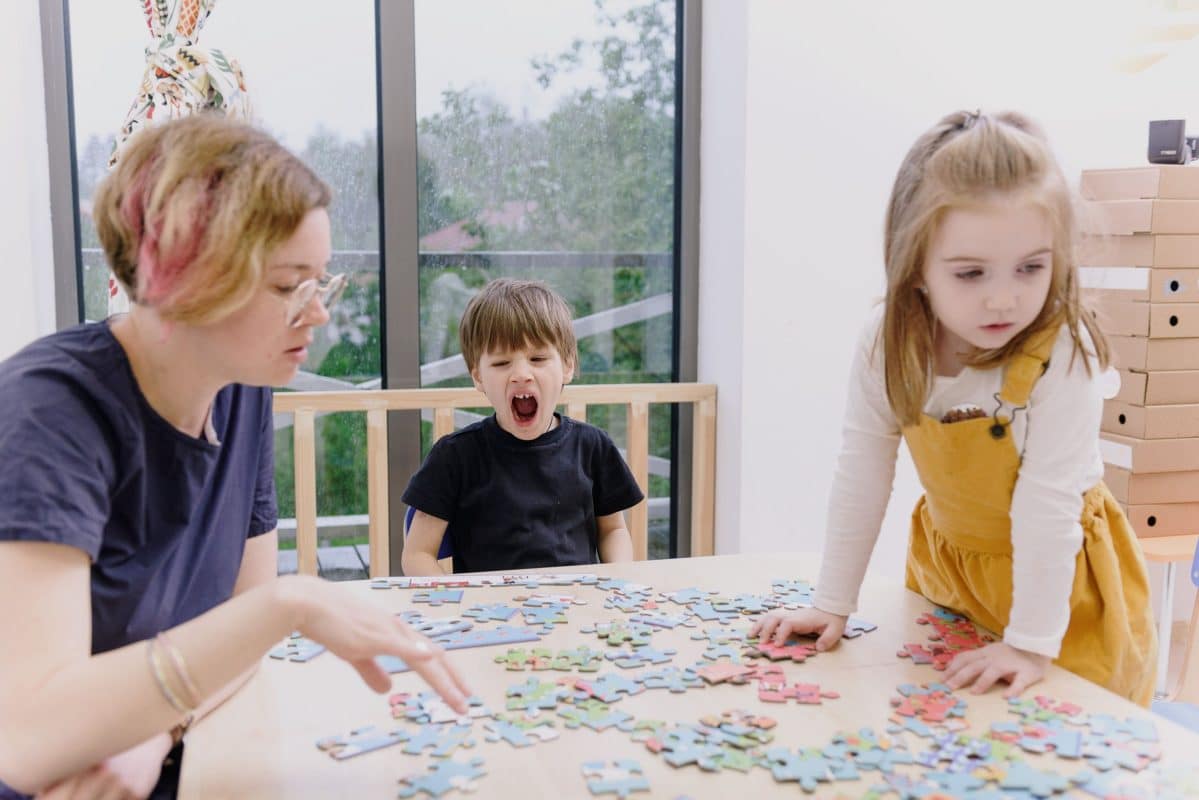
Perhaps you buy a wooden puzzle that looks perfect for their age. Maybe you set up a brain game that promises to build critical thinking skills. Yet instead of becoming engaged, your child walks away, becomes frustrated, or asks for help almost immediately.
When this happens, it is easy to assume that the puzzle is too difficult or that your child simply does not enjoy problem-solving activities.
However, the reality is usually far more interesting.
Most children who struggle with logic puzzles are not lacking intelligence. In many cases, they are missing one or more foundational skills that support logical thinking. Once these skills begin to develop, the same child who previously avoided puzzles may suddenly become fascinated by them.
Understanding what happens beneath the surface can help parents support learning without pressure and choose activities that match their child’s developmental stage.
The Biggest Myth About Logic Puzzles
One of the most common misconceptions is that logic puzzles measure intelligence.
They do not.
Logic puzzles rely on a collection of skills working together at the same time. A child may be highly creative, socially aware, or verbally advanced while still finding logical challenges difficult.
Just as learning to read requires several foundational abilities before words begin to make sense, solving puzzles requires developmental building blocks that emerge gradually.
The goal is not to determine whether a child is “smart enough” for puzzles.
The goal is to understand which skills are still developing.
Reason #1: The Child Has Not Yet Developed Strong Pattern Recognition
Many logic puzzles depend on the ability to notice relationships.
Children must identify:
- Similarities
- Differences
- Sequences
- Repeating patterns
Adults often do this automatically. Children do not.
For example, before a child can successfully solve many logic challenges, they often benefit from simpler activities such as sorting colors, matching shapes, and recognizing visual relationships.
This is why early shape matching activities often play an important role in later logical thinking.
Children who spend time comparing objects, identifying differences, and grouping similar items are quietly building the foundation that future puzzle-solving depends upon.
Reason #2: Working Memory Is Still Developing
Imagine trying to solve a puzzle while forgetting each move a few seconds later.
That is essentially what happens when working memory is still immature.
Working memory allows children to hold information in their minds while using it.
For example:
- Remembering which solution already failed
- Tracking multiple possibilities
- Comparing different choices
- Planning several steps ahead
Logic puzzles place significant demands on this system.
A child may understand the puzzle perfectly well yet struggle because their brain is still learning how to manage information efficiently.
Fortunately, working memory grows naturally through play, exploration, and everyday experiences.
Reason #3: They Have Not Learned How to Manage Frustration Yet
This may be the most overlooked factor of all.
Many parents assume children avoid puzzles because they cannot solve them.
Often, children avoid puzzles because they do not like how failure feels.
Logic puzzles require mistakes.
Children test ideas.
Ideas fail.
They try again.
Then they fail again.
This cycle is completely normal.
However, some children experience frustration so intensely that they abandon the activity before meaningful learning begins.
Interestingly, temporary frustration is often a sign that the brain is working.
A similar process occurs when children experiment with balancing stones and discover that structures repeatedly collapse before they learn how balance works.
The struggle itself is part of the learning process.
Reason #4: The Puzzle Is Jumping Too Far Ahead
Parents frequently move from simple toys directly to advanced logic challenges.
Unfortunately, the brain does not always develop in large leaps.
It develops in small steps.
Consider this progression:
Matching objects
↓
Sorting objects
↓
Completing simple patterns
↓
Following visual sequences
↓
Basic logic challenges
↓
Complex puzzle solving
When one step is skipped, the next step often feels overwhelming.
This explains why some children thrive with geometric eggs matching toys but become discouraged when presented with advanced logic puzzles immediately afterward.
The issue is not ability.
The issue is developmental sequencing.
Reason #5: They Prefer Open-Ended Thinking
Not every child enjoys the same type of thinking.
Some children naturally gravitate toward:
- Building
- Designing
- Creating stories
- Constructing imaginative worlds
These children often enjoy activities with multiple solutions.
Logic puzzles, on the other hand, usually have a single correct answer.
That difference matters.
Children who love open-ended play are not weaker thinkers.
In fact, many eventually become excellent problem-solvers.
They simply approach thinking from a different direction.
This is one reason why children who enjoy construction activities often develop strong problem-solving skills in early childhood even before they become interested in traditional logic games.
Reason #6: Attention Span Is Not Ready Yet
Many logic puzzles require sustained concentration.
A child may need to:
- Observe carefully
- Compare possibilities
- Test solutions
- Persist through mistakes
This process takes time.
Children whose attention systems are still developing may lose interest before they experience success.
That does not mean they cannot learn logical thinking.
It simply means they may need shorter challenges first.
As focus develops, puzzle engagement often increases naturally.
This is particularly common among children who are already making progress in activities that strengthen concentration and independent play.
Reason #7: Adults Accidentally Help Too Much
This is one of the most surprising reasons children struggle.
Parents naturally want to help.
However, excessive guidance can unintentionally reduce independent thinking.
Imagine a child attempting a puzzle.
Within seconds, an adult says:
“Try this piece.”
“Put it here.”
“That’s wrong.”
“Do it this way.”
The child quickly learns that the adult will solve the problem.
As a result, genuine problem-solving never develops.
Support is important.
Yet questions often work better than answers.
Instead of showing the solution, try asking:
- What do you notice?
- Which piece looks different?
- What have you already tried?
Questions encourage thinking.
Answers often end it.
What Successful Puzzle Solvers Usually Have in Common
Children who eventually enjoy logic puzzles are not necessarily more intelligent.
Instead, they tend to share several characteristics:
- Curiosity
- Persistence
- Pattern recognition
- Frustration tolerance
- Working memory development
- Growing attention span
These skills develop gradually.
No child is born with all of them.
That is why readiness matters more than age.
In fact, many of the signs a child is ready for logic puzzles appear long before they successfully complete difficult puzzles.
How Parents Can Build Puzzle Readiness Without Pressure
The best approach is often indirect.
Instead of forcing logic games, focus on experiences that strengthen the underlying skills.
Helpful activities include:
Sorting Games
Sorting strengthens categorization and comparison skills.
Matching Activities
Matching improves visual discrimination and pattern recognition.
Construction Toys
Building activities encourage planning and experimentation.
Sensory Exploration
Sensory play strengthens observation and attention.
Progressive Brain Games
Start with simpler challenges before introducing more advanced activities such as a wooden Tetris puzzle or complex logic boards.
Children gain confidence when success and challenge remain balanced.
The Real Goal Is Bigger Than Puzzle Solving
Parents often focus on whether the puzzle gets completed.
Yet completion is not the most important outcome.
The true value lies in the thinking process.
Each attempt teaches children how to:
- Evaluate information
- Test ideas
- Adapt strategies
- Recover from mistakes
- Persist through uncertainty
These skills transfer far beyond toys.
They support learning, decision-making, creativity, and resilience throughout life.
In other words, the puzzle is not the destination.
It is simply the training ground.
Final Thoughts
When children struggle with logic puzzles, the problem is rarely intelligence.
More often, they are still developing the hidden skills that logical thinking requires.
Pattern recognition, working memory, attention, frustration tolerance, and curiosity all play important roles.
Rather than rushing children toward harder challenges, parents can support development by focusing on the foundations first.
Over time, many children who once avoided puzzles become enthusiastic problem-solvers.
The goal is not to create children who solve puzzles quickly.
The goal is to create children who keep thinking when solutions are not immediately obvious.
FAQ
Why does my child get frustrated with logic puzzles?
Many children become frustrated because skills such as working memory, attention, and frustration tolerance are still developing.
At what age should children start logic puzzles?
There is no perfect age. Readiness depends more on developmental skills than on age alone.
Are logic puzzles good for brain development?
Yes. Logic puzzles can support problem-solving, reasoning, persistence, and critical thinking when matched to a child’s developmental level.
What should I do if my child refuses puzzles?
Avoid pressure. Instead, focus on matching, sorting, building, and other foundational activities that support logical thinking.
Can open-ended play help with logic skills?
Absolutely. Open-ended play develops planning, experimentation, and flexible thinking, which later support puzzle-solving abilities.
How do I know if a puzzle is too difficult?
If a child becomes overwhelmed quickly, repeatedly asks for help, or avoids the activity entirely, the challenge level may be too high.